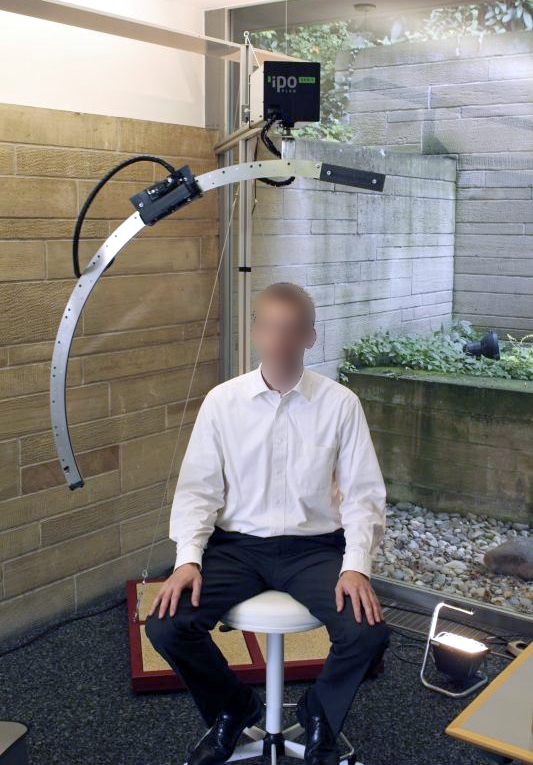
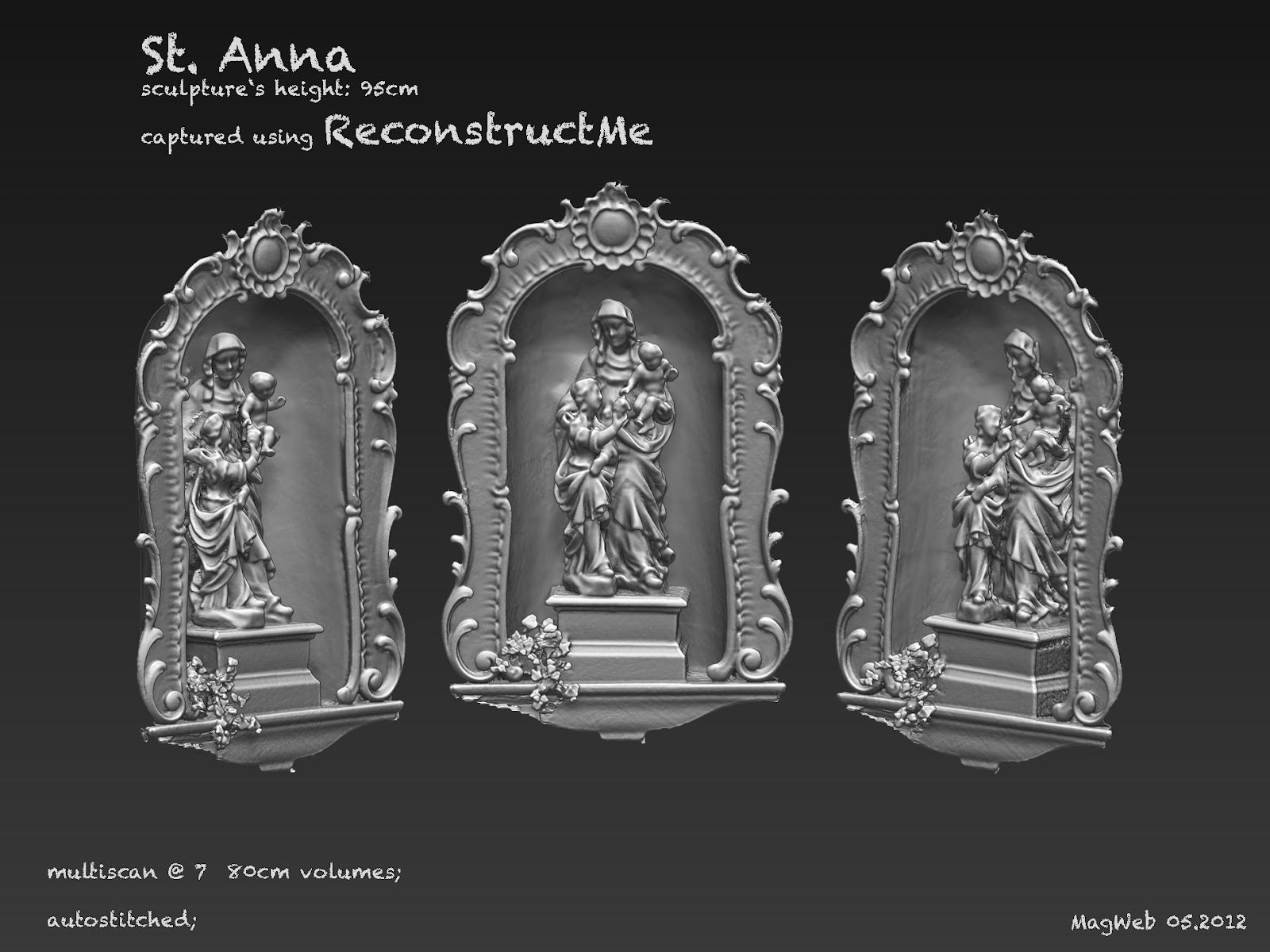
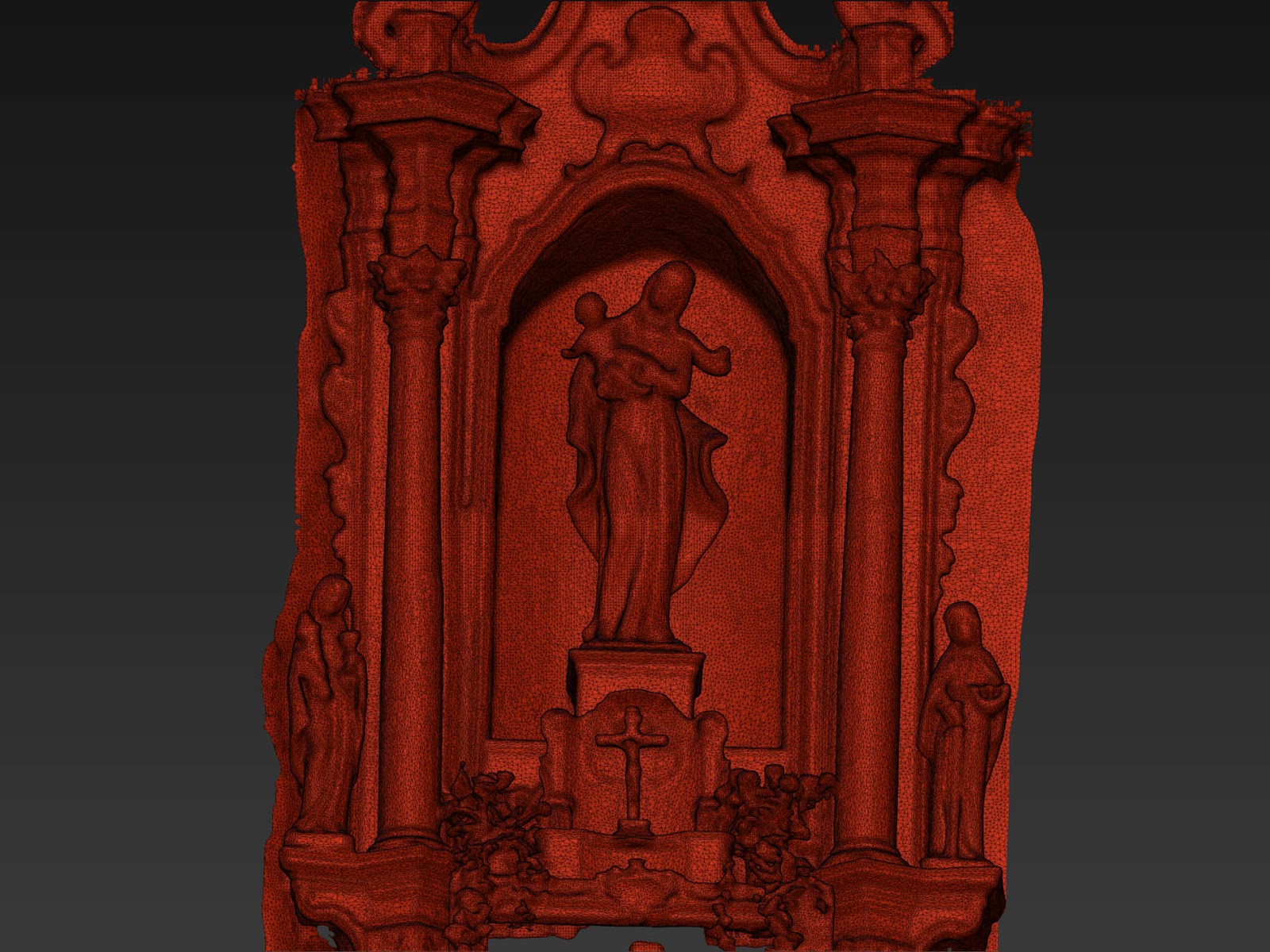
We’ve released new versions of ReconstructMe (ReconstructMeQt in previous versions) and ReconstructMe SDK. Were happy to introduce OpenNi 2 with this release. We decided to remove the sensor driver installer option from the installer of ReconstructMe and ReconstructMe SDK, since there is only either the Asus sensor driver necessary, or the Microsoft SDK v1.6.
The new SDK provides a faster and more memory efficient polygonization routine. ReconstructMe generally got faster and easier to handle. Feel free to check out the new version and test it.
Category Archives: Media
Fiere Margriet
Amazing projector project by Mark Florquin uses ReconstructMe for 3D scanning:
We projected the story of ‘Fiere Margriet’ on a small but charming street (Eikstraat), during Leuven in Scène 2012. ‘Fiere Margriet’ (Proud Margriet) is an old legend from Leuven. In short it tells the story of a young lady who gets mugged and killed by a gang of thieves. They dump her into the main river in Leuven, De Dijle. Her body doesn’t sink however, but floats miraculously upstream, surrounded by a magical light.
In their making-of video gives an idea on how ReconstructMe was used to digitalize the womans body in different poses.
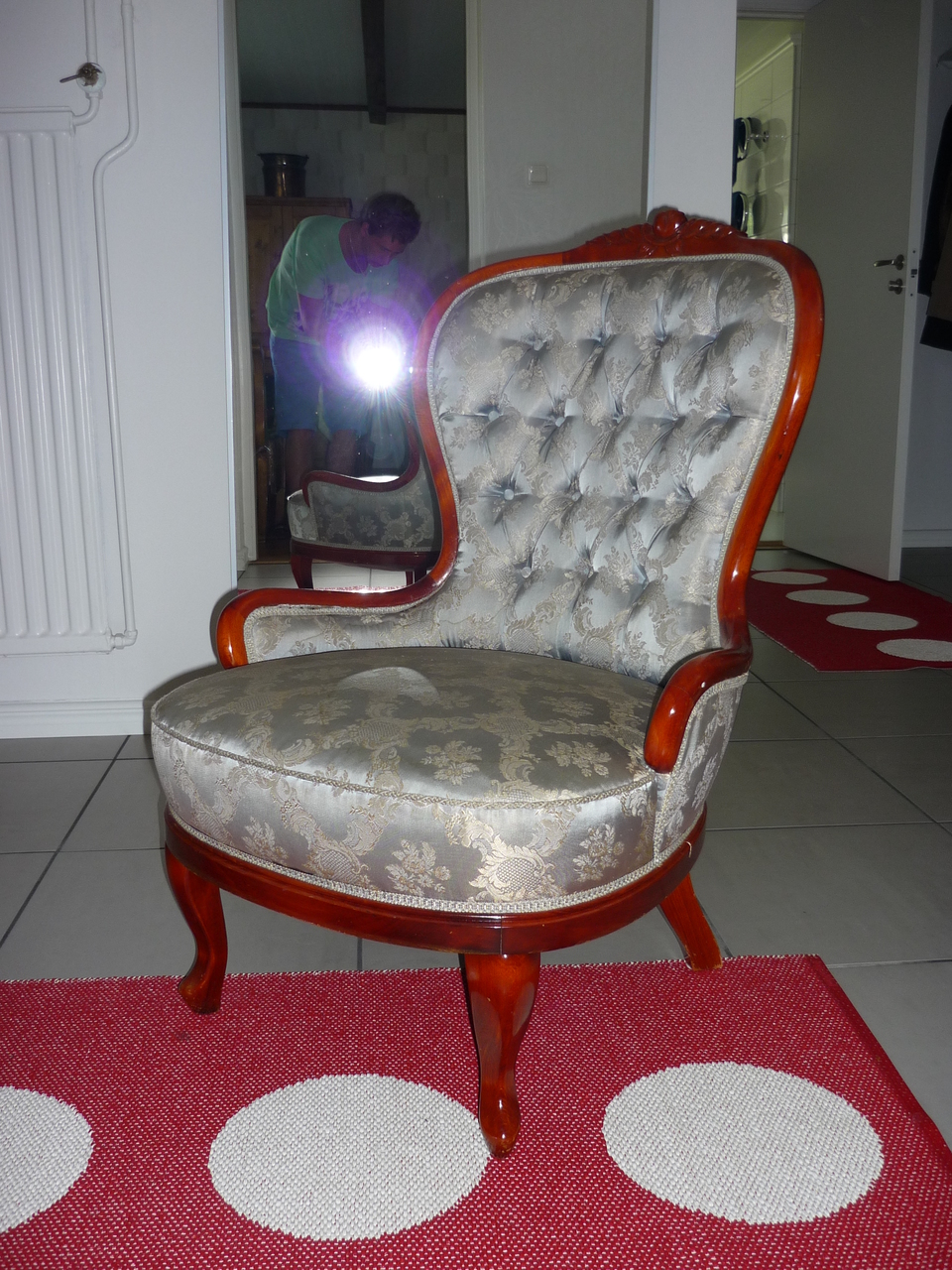
Reconstruction of a Chair
Online 3D Viewer
A while ago, I’ve posted a scan of myself on SketchFab. The nice thing about it is that it is possible to integrate a 3D viewer in your browser:
This should work with any modern browser.
Head Hunters – Awesome Video made with ReconstructMe
Corridor Digital has created an amazing clip with the help of ReconstructMe.
The sand models are created with a Kinect and ReconstructMe:
Body and Head Scans
Mark Florquin has uploaded another beautiful set of 3D scans animated through a turntable move. Here’s the video
Head Sculpt Reconstruction and Postprocessing
Here’s a nice time-lapse video showing postprocessing a raw ReconstructMe scan of a head sculpt.
And this is the final result
Horse Head Reconstruction
We’ve discovered a nice video showing a horse head scanned with ReconstructMe.
Surface Reconstruction
While making some serious progress on texturing scanned surfaces, we ran into need of a more decent surface reconstruction and decimation technique. Until now, exported meshes contained hundreds of thousands of triangles, adding unnecessary overhead in regions that could be expressed with just a couple of triangles (e.g planar regions). Additionally, we felt the need of closing small surface holes in order to allow smooth texturing across the surface.
Therefore we re-designed our surface reconstruction pipeline to support more sophisticated reconstruction techniques and a configurable surface decimation pipeline.
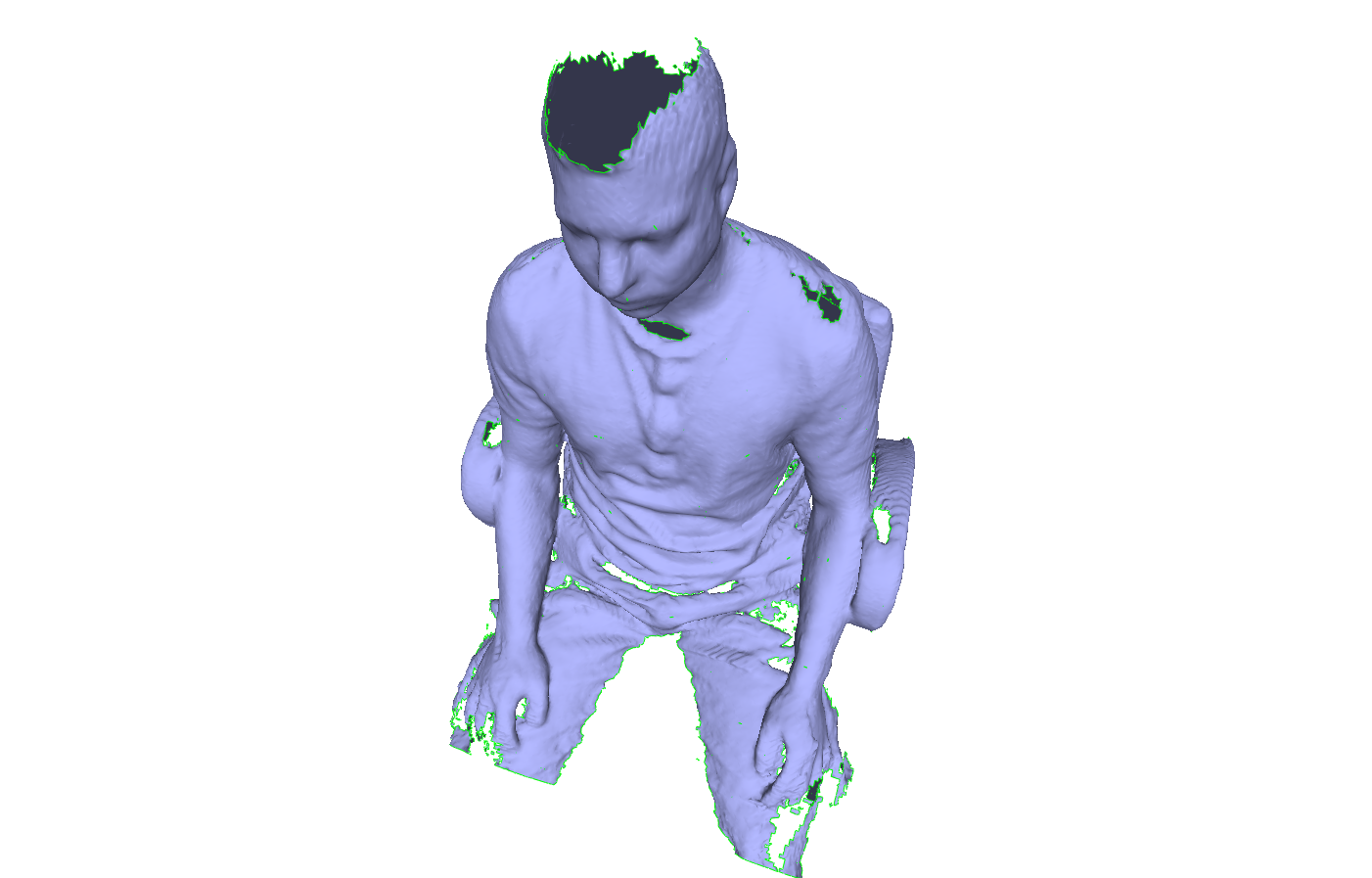
Below is an image that shows the original mesh as generated by the current version of ReMe (v. 0.6.0-405). It contains roughly 250.000 faces and one can clearly spot the holes that remained due to the lack of visibility of these areas while scanning.
In contrast, the next image shows a successful reconstruction of the original surface reduced to 50.000 faces with boundary holes closed.
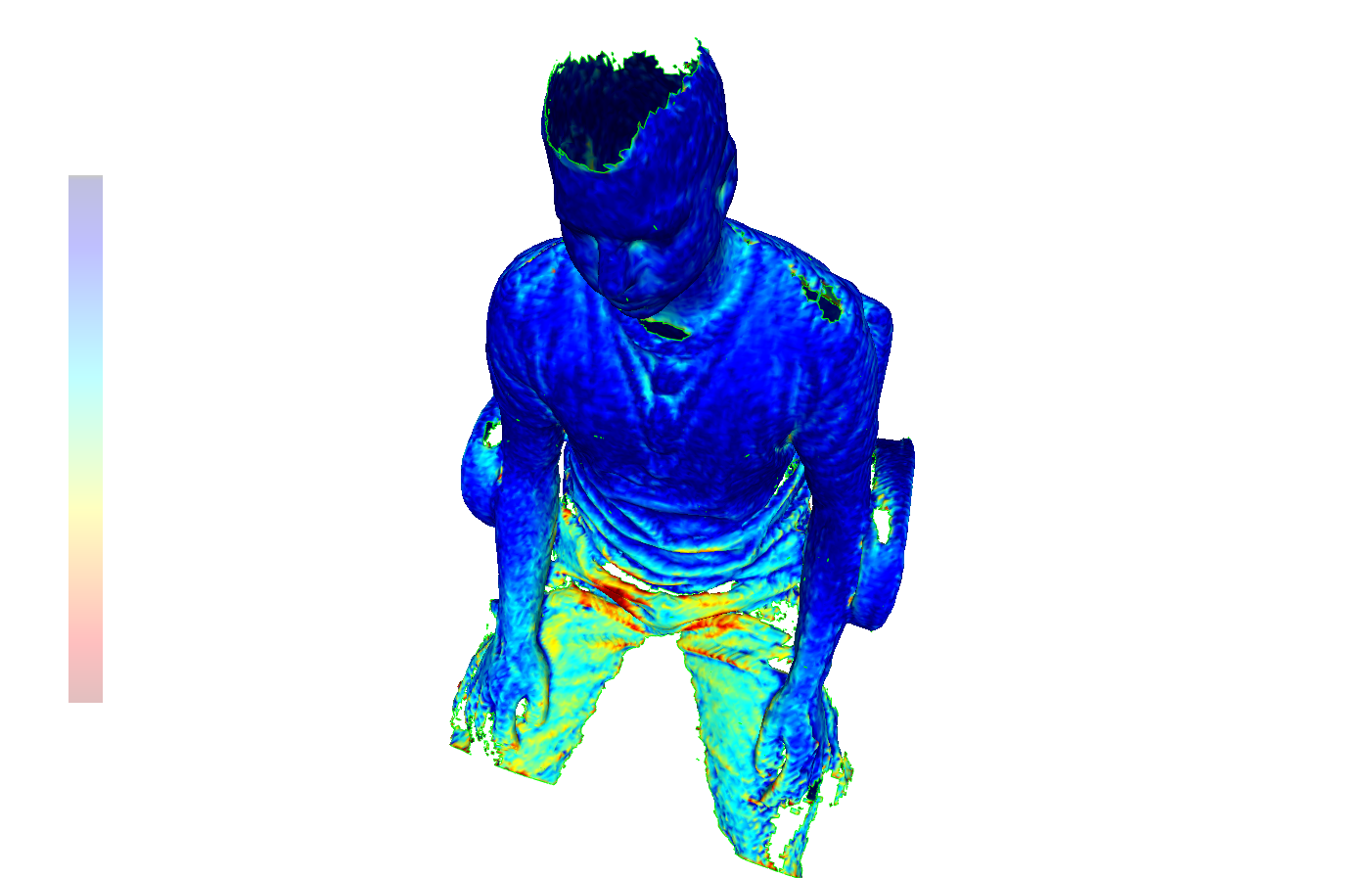
Comparing both meshes using the Hausdorff distance gives an average distance of 0.8 mm. The image below colorizes the distances (blue low, red high).
Surface reconstruction isn’t limited to individual meshes, but can also be used to fusion multiple volumes into one single consistent mesh. The image below shows two individual stitched meshes using ReMe’s --multiscan feature.
Here is the fusioned mesh as generated by the development version of ReMe
Stay tuned!
On Making Things Matter
Taken straight from Thingiverse
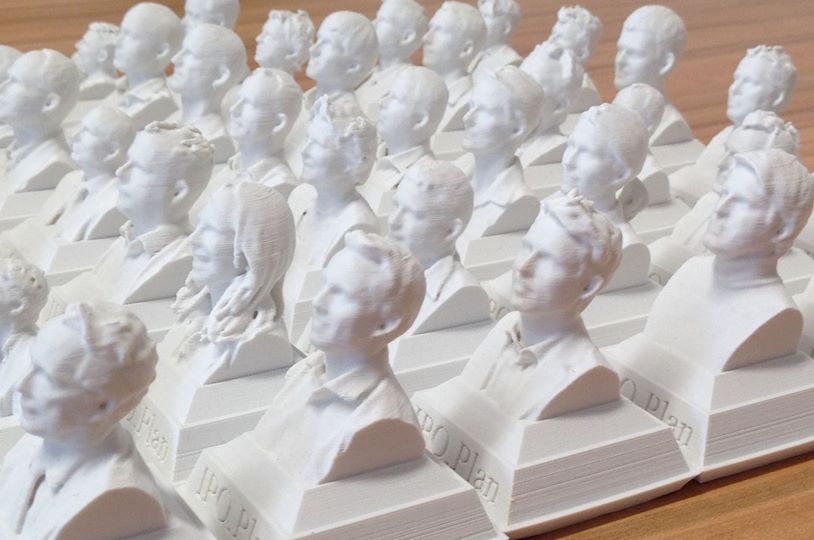
Mike Moceri and Tom Burtonwood collaborated on a project that premiered May 26th at The Southside Hub of Production for the exhibition “On Making Things Matter”. We 3d scanned (with the Kinect, Reconstructme + Netfabb) visitors at the opening reception and then 3d Printed them with a MakerBot Thing-O-Matic. All the “portraits” we scanned are uploaded to Thingiverse to share with teh internets. We have also scanned portions of the exhibition and the interior of the building and we will be installing 3d prints of these vignettes over the course of the exhibition.
Here’s a video (you can see ReMe in action at the beginning of the video)
Mike attended the Zhou B. Art Center in Chicago participating in an event called Facemask. More on this including a video stream can be found here.